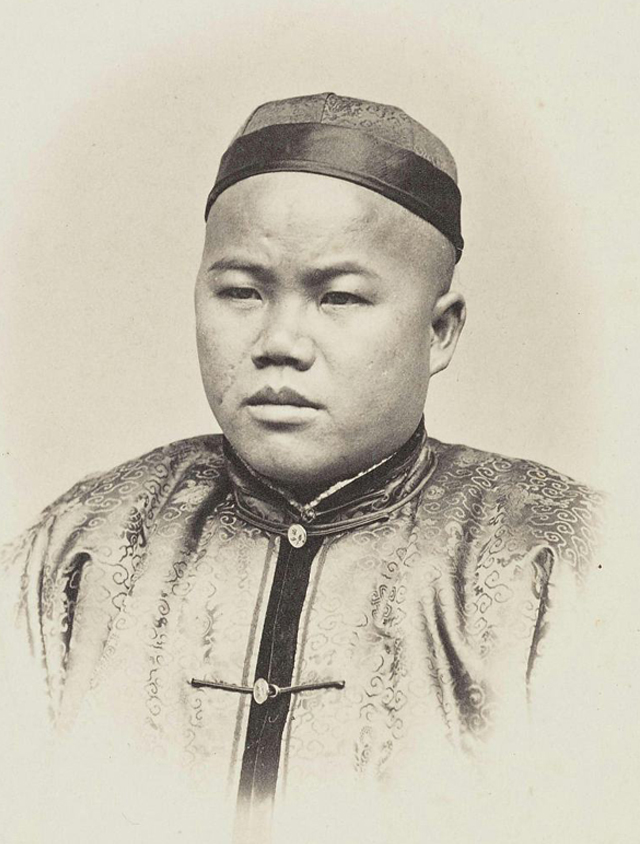
 黎芳个人肖像

名称: Boy in Straw Raincoat/穿蓑衣的男孩
类别: CDV Albumen photo/CVD照片
日期: 1850
尺寸: 6.4x10.2cm

名称: Guangzhou Street/广州街道
类别: Albumen photo/蛋白照片
日期: 1860
尺寸: 20x25cm
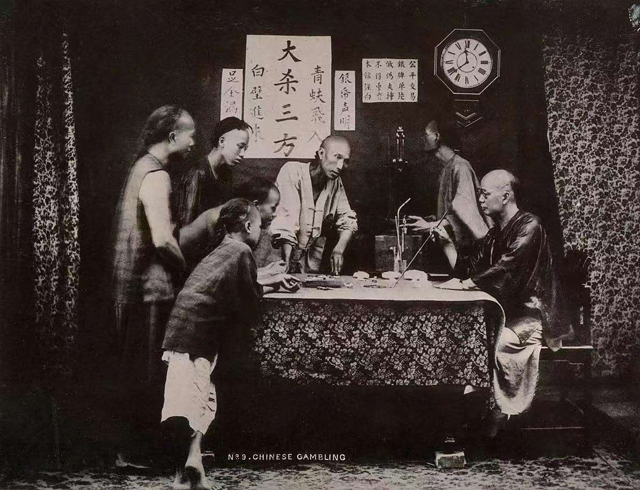
名称: Tabletop Game/卓上游戏
类别: Albumen photo/蛋白照片
日期: 1870
尺寸: 20x25cm
Lai Fong/Afong (1839-1890) was one of the most celebrated Chinese photographers of the 19th century and a pioneer of commercial photography in Hong Kong. Around 1859–1860, he founded Afong Studio on Queen’s Road, one of the earliest photographic studios in the city, formally established as Hua Fong Studio in 1870, with a branch in Weihai/Yantai, Shandong. Originally from Guangdong, Lai Fong fled to Hong Kong during the Taiping Rebellion and may have begun photographing as early as 1859. Unlike many photographers who stayed in their studios, he traveled extensively across southern and northern China, visiting Guangzhou, Shantou, Fuzhou, Xiamen, Macau, Taiwan, Shanghai, Yantai, and Beijing, photographing people from all social strata—including officials, merchants, tradesmen, barbers, and foreigners—as well as scenic landscapes.
黎芳/Afong(1839-1890) 是19世纪最著名的中国摄影师之一,也是香港商业摄影的先驱。大约在1859–1860年,他在香港皇后大道创办了阿芳照相馆,是香港最早期的照相馆之一,1870年正式成立为华芳照相馆,并在山东威海/烟台开设分馆。黎芳原籍广东,太平天国运动时期避难香港,他可能早在1859年就开始摄影活动。与许多摄影师不同,黎芳并不局限于照相馆,而是背负沉重设备,行走中国南北各地,足迹遍及广州、汕头、福州、厦门、澳门、台湾、上海、烟台和北京,拍摄各阶层人物——官员、商人、手工艺人、理发师、外国人等——以及自然风光。
Artistically, Lai Fong’s work reflects a deep influence from traditional Chinese painting. He emphasized balanced and symmetrical composition in portraiture rather than strictly reproducing natural appearances, contrasting with Western photographic conventions of the time. His albumen prints are noted for their refined tonal range, clarity, and careful use of light and shadow, creating a harmonious aesthetic that appeals both visually and culturally. These qualities established him as a master of late Qing photography and contributed to his enduring reputation.
Regarding museum collections, Lai Fong’s works are preserved in numerous institutions worldwide, including the Asian Art Museum (San Francisco), the Metropolitan Museum of Art (New York), Harvard Art Museums, and the Hong Kong Museum of History. Most of his surviving works were taken during the 1870s and 1880s, providing firsthand visual documentation of late Qing China and remaining highly sought after in international auctions. Beyond his photographic achievements, Lai Fong demonstrated exceptional business acumen, amassing wealth through studio management and investments, further enabling his artistic pursuits. British photographic historian Terry Bennett described him as “one of the finest photographers in the Far East in the 19th century.”
在艺术成就方面,黎芳的作品深受中国传统绘画影响。他强调肖像构图应注重画面平衡与对称,而非完全复现自然外貌,这与当时西方摄影追求避开直线和垂线的习惯形成鲜明对比。他的蛋白印相作品以细腻的层次、清晰的影调和光影处理著称,兼具视觉美感和文化价值,使其成为晚清摄影的代表人物,并奠定了持久声誉。
在博物馆收藏方面,黎芳的作品现被世界多家机构珍藏,包括旧金山亚洲艺术博物馆、纽约大都会艺术博物馆、哈佛艺术博物馆以及香港历史博物馆等。他大部分存世作品拍摄于1870至1880年代,为研究晚清历史提供了第一手影像资料,也在国际拍卖市场上备受追捧。除摄影成就外,黎芳的商业眼光同样卓越,通过经营照相馆及投资,积累财富,并进一步拓展了艺术追求。英国摄影史学家泰瑞·贝内特评价他为“19世纪远东最优秀的摄影师之一”。 >>返回>>

 PHOTO影像