名称: Grand Canal (Huaian Section)/杭大运河(淮安段)
类别: Gum Dichromate Printing Process/树胶重铬酸盐印相法
日期: 1910s-1920s
尺寸: 30x40cm


名称: Three Gorges/三峡
类别: Gelatin Silver Print/银盐照片(手工上色)
日期: 1926
尺寸: 20x28cm

Note: 树胶重铬酸盐印相法(Gum Dichromate Printing Process)是19世纪中叶兴起的一种摄影印相技术,以阿拉伯树胶、重铬酸盐和颜料为主要材料,能够呈现出独特的层次感和绘画效果。由于其手工操作性强,每一次显影都带有艺术家的主观控制与审美选择,因此作品往往兼具摄影与绘画的双重特征。其色彩的柔和与肌理的丰富,使其成为象征主义和画意摄影的重要表现手段。如今,树胶重铬酸盐印相作品已成为世界知名博物馆和摄影收藏机构关注的重点,如法国摄影博物馆、美国乔治·伊士曼博物馆等均有典藏。这类作品不仅见证了摄影与美术跨界融合的探索历程,也为研究19世纪末至20世纪初艺术与技术的互动提供了宝贵的实物资料,艺术价值和学术意义深远。


Donald Mennie (1875-1944), a Scottish-born American photographer, arrived in Shanghai in 1899 and became managing director of Watson’s Pharmacy. During the Boxer Rebellion, he joined the Shanghai Volunteer Corps, a paramilitary force defending the International Settlement. After the outbreak of the Pacific War in December 1941, the Japanese occupied the Shanghai International Settlement. Mennie was arrested for photographing Japanese military atrocities on the streets of Shanghai and imprisoned in the Lunghua Civilian Assembly Center. According to American scholar Greg Leck in Captives of Empire: The Japanese Internment of Allied Civilians in China, 1941–1945, Mennie entered Lunghua in March 1943. The harsh conditions severely undermined his health, and though later transferred to a hospital, he died in Shanghai in January 1944.

唐纳德·曼尼/Donald Mennie(1875年-1944年),苏格兰裔美籍摄影师,他于1899年来到上海,任上海屈臣氏大药房的董事经理,在义和团运动期间,他加入公共租界中的准军事组织上海义勇队(Shanghai Volunteer Corps),保卫公共租界。1941年12月太平洋战争爆发后,日本占领上海租界,由于他在当时上海街头拍摄日本军队的暴行被抓入上海龙华集中营。 据研究上海集中营的美国学者莱克(Greg Leck)在《帝国的俘虏: 日本在中国与香港的集中营》一书中介绍,唐纳德·曼尼在1943年3月进入龙华集中营,恶劣的条件使已年近70的他健康情况恶化,随后被转移到医院治疗,不幸于1944年1月在上海去世。

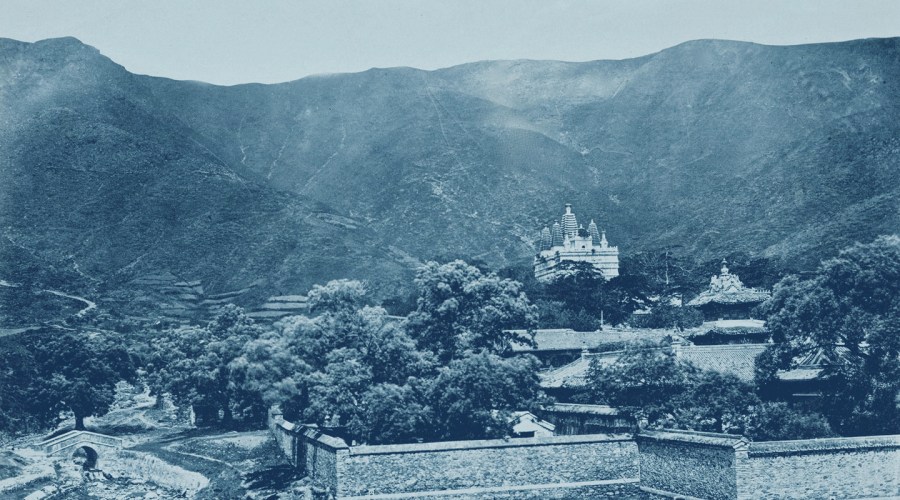
Beyond his tragic end, Mennie is best remembered for his artistic achievements in photography. Known as “the last pictorialist of China,” he produced atmospheric platinum and photogravure prints that captured China’s landscapes, architecture, and daily life in a romantic, painterly style. His celebrated works include The Pageant of Peking (1920) and China, North and South (1922), both combining documentary value with aesthetic refinement. Today, Mennie’s photographs are preserved in major collections, including the British Library, the Library of Congress, and the Getty Research Institute. His work is recognized not only as a visual record of early 20th-century China but also as an enduring contribution to cross-cultural artistic heritage, blending Western pictorialism with Chinese subject matter in a uniquely evocative form.

曼尼重要拍摄时期是1910-1930年代,这期间当时上海及江南地区相对中国北方比较太平富足),他擅长拍摄风景和周边市民日常生活。1920年他出版的第一本摄影画册《北京美观》(The Pageant of Peking)。该画册收录了66张作品,内容包括颐和园、碧云寺、北海、孔庙、戒台寺风景名胜以及当时北京的市井生活场面,是难得一见的关于当时北京的大型摄影画册。该画册初版仅印制1000本,出版后大受欢迎,在随后数年里多次再版。

民国初年他曾两次沿长江溯流而上,记录了秀丽壮美的三峡风景,并出版了《扬子风景》(The Grandeur of the Gorges), 此书是曼尼续《北京美观》之后的又一力作,该画册出版于1926年,限量发行1000本,收录了手工上色的原版银盐照片12 张和38张凹版印刷照片,它纪录下了民国期间的晴滩、夔府、巫峡、獭洞滩、黄陵庙、文山、万县县城、风箱峡、灯影峡、牛肝马肺峡、张飞庙、重庆县城等长江景致以及汽船、渡船、纤夫和红船等反映当时内河航运状况,是继约翰·汤姆逊(John Thomson)之后有关长江流域最重要的摄影作品之一,也是目前所见最精美的中国摄影画册之一。

此外,他还出版过《山水写真》(China by Land and Water)、《中国风景画》(Glimpses of China)、《中国美术画》(Picturesque china)、《中国南与北》(China, North and South)等画册,这些画册中收录了北京、上海、杭州、苏州、宁波、无锡、威海卫等地以及长江、闽江流域的风景民俗。

作为二十世纪上半叶重要的摄影家,曼尼摄影技术精湛,善于采用逆光拍摄,十分注重光影的层次与质感,作品呈现出朦胧而细腻的独特美感。 他坚守着传统的湿版摄影工艺,作品为二十世纪初极具个人风格的画意摄影佳作。他并不注重特定内容,但十分注重拍摄的角度和画面的效果,无论是晨雾、湖泊、江河、风光,还是桥梁、街市、胡同甚至灰尘漫天的篷车队,都十分注意光影、阴影和质感与层次,喜好侧逆光,作品呈现着朦胧而细腻的独特美感,有些照片还具有国画般的情趣,可以作为中国文人画意摄影的参照物,去感受东西方摄影文化的差异,因此具有很高的艺术价值。 >>返回>>
 PHOTO影像