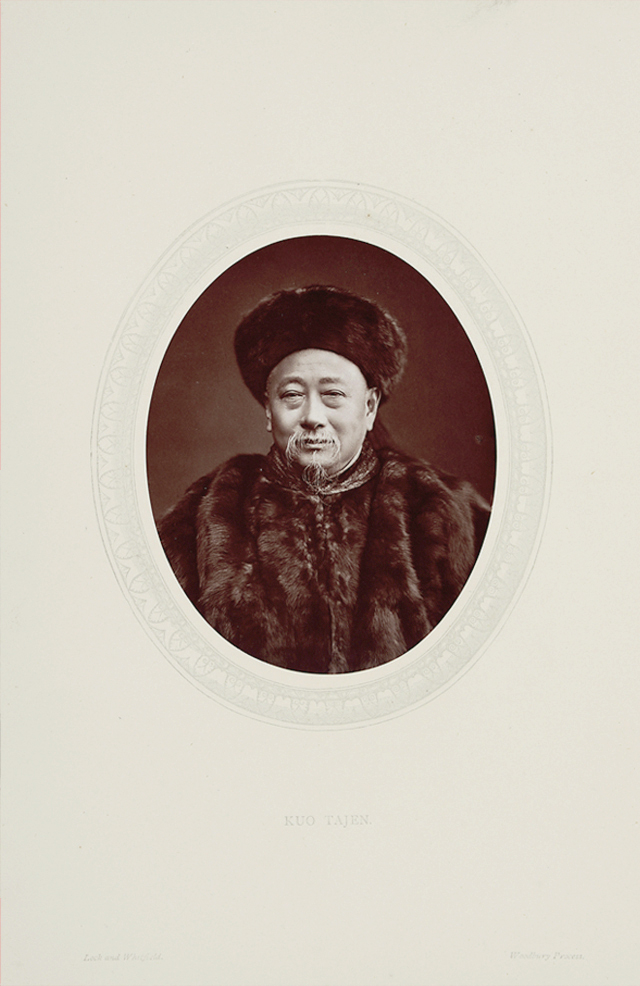
 名称: Guo Songtao/郭嵩焘
类别: Woodburytype/伍德伯里印相法
日期: 1866-1870
尺寸: 22x28cm
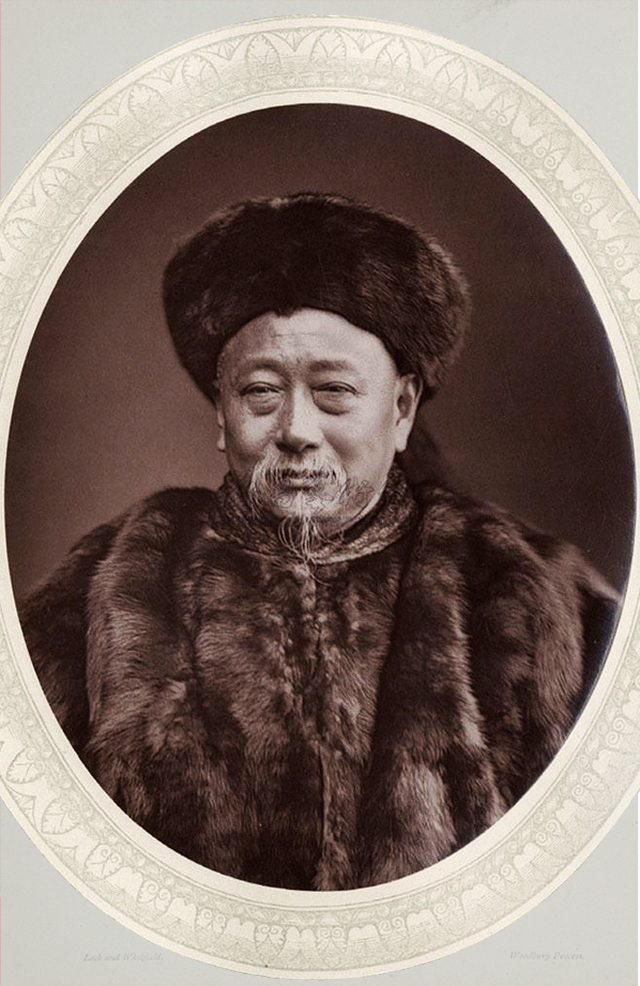
名称: Guo Songtao/郭嵩焘
类别: Woodburytype/伍德伯里印相法
日期: 1866-1870
尺寸: 22x28cm
Note: 此照片拍摄中国清代外交家郭嵩焘(1818年-1891年),湘阴人,字伯琛,号筠仙,湘军创建者之一, 中国首位驻外使节。1877年任清政府驻英法公使,1878年参加巴黎世博会开幕式,成为中国首位参加世博会开幕式的外交大使。由于他的言行不被朝廷理解,同年他被清政府召回,从此闲居。郭嵩焘是第一个正式领衔出使西方,真正走向世界的中国人。也是洋务思想家,中国职业外交家的先驱。郭嵩焘对西方的观察,超越了他的时代,他的主张不容于世,晚景甚为凄凉。他是一个被唾弃的先知,一个受责难的独醒者,一个被攻讦的爱国者,这都是发生在郭嵩焘身上的遭遇。他在沿海查办税务之时,他拒绝收礼、不住公馆、秉公执法,招致部下忌恨,严查税务强硬反贪触动一大片人的利益,还开罪了僧格林沁。他是一个真正的知识分子,不乡愿,不滑头,不圆通,在官场屡跌跟头,终被罢官回籍。郭嵩焘曾经写信给李鸿章时说:“人民富足,国家才可以谈富强。”,“船坚炮利是最微末的小事,政治制度才是立国的根本。”,“中国之大患,在于士大夫没有见识。”1891年,郭嵩焘郁郁而终。此照片是已知唯一以伍德伯里印相法制作的中国人照片。
 名称: Leon Gambetta/甘贝塔·莱昂
类别: Woodburytype/伍德伯里印相法
日期: 1866-1870
尺寸: 22x28cm
名称: Leon Gambetta/甘贝塔·莱昂
类别: Woodburytype/伍德伯里印相法
日期: 1866-1870
尺寸: 22x28cm
备注: 甘贝塔,莱昂(Leon Gambetta, 1838-1882)法国政治家,在普法战争期间及其之后颇具影响力。
The Woodburytype printing process was invented by British artist Samuel Robert Lock (1822-1881) between 1864 and 1865, and stands as one of the most refined and artistically significant techniques in nineteenth-century photographic reproduction. Lock, a London-based portrait painter and photographer active from the mid to late nineteenth century, initially transformed Talbotype photographs into miniature portraits and co-founded the studio Lock & Whitfield with George Whitfield in 1856. He became renowned for employing the Woodburytype process in his large-scale portrait series Men of Mark, exerting a profound influence on the dissemination of photographic art and publication.
英国艺术家塞缪尔·洛克(Samuel Lock,1822-1881)于1864年至1865年间发明伍德伯里印相法(Woodburytype)是十九世纪摄影复制史上最为精致且具有艺术意义的工艺之一。其原理与凹版印刷相似,但工艺更为复杂,所成图像层次丰富、细节清晰,并带有轻微的浮雕感。与当时其他照相制版方法不同,伍德伯里印相法是唯一能够在商业印刷中近乎完美再现照片影调与细节的工艺,因此在十九世纪后半叶被广泛应用于精美图书插图及高端摄影画册。
The Woodburytype process is based on principles similar to intaglio printing but is more complex, producing images with rich tonal gradation, fine detail, and a slight relief effect. Unlike other contemporary photomechanical methods, it was the only technique capable of reproducing photographs with near-perfect fidelity in commercial printing, and was widely used for high-quality book illustrations and deluxe photographic albums in the latter half of the nineteenth century.
Its artistic achievement lies in faithfully capturing subtle gradations of light and shadow, giving printed photographs a high degree of realism and aesthetic quality. The images possess depth and nuance, praised by contemporary critics as the closest representation of original photographs. However, the process required exceptional technical skill: plates had to be cast under immense hydraulic pressure, making production labor-intensive and difficult to industrialize. By the end of the nineteenth century, Woodburytype was largely supplanted by more economical and efficient techniques such as photogravure and collotype.
Consequently, surviving Woodburytypes are extremely rare and highly valued for both collection and research. Major examples are held by institutions such as the Victoria and Albert Museum (London), the Metropolitan Museum of Art (New York), and the Getty Research Institute (Los Angeles), while select works can also be found in the Shanghai History Museum. These pieces not only preserve the rare heritage of the Woodburytype process but also underscore Lock’s pivotal role in the development of nineteenth-century photographic art.
这一技术的艺术成就在于它能忠实呈现摄影的光影微妙变化,使印制照片具备高度的真实感和艺术性。其作品影像深邃、层次细腻,被同时代评论者誉为最接近原始照片质感的印刷品。然而,伍德伯里印相法对技术要求极高:印版需在巨大的液压压力下铸造,制作过程费时费力,难以实现工业化生产。到十九世纪末,因成本高昂且操作复杂,该工艺逐渐被更廉价高效的凹版和胶版印刷取代。
正因如此,今日存世的伍德伯里印相作品极为稀少,具有极高的收藏与研究价值。现今在伦敦维多利亚与阿尔伯特博物馆、纽约大都会艺术博物馆、洛杉矶盖蒂研究院等国际重要机构皆有收藏。在中国,部分作品亦见于上海历史博物馆等馆藏。这些作品不仅保存了这一工艺的珍稀遗产,更彰显了其在十九世纪摄影艺术发展中的崇高地位。>>返回>>

 PHOTO影像