
名称: 清末宫廷太监
类别: Photography/照片
日期: 1949
尺寸: 30cm×40cm
备注:Eunuch of the Imperial Court of the Last Dynasty, Peking, 1949/清末宫廷太监,北平,1949
Note: 《清末宫廷太监,北平,1949》(Eunuch of the Imperial Court of the Last Dynasty, Peking, 1949)是亨利·卡蒂埃-布列松在中国拍摄的代表作之一。这幅作品摄于1949年新中国成立前夕,画面中的人物是一位清朝宫廷旧制度的幸存者——太监。他身着传统服饰,神情冷峻而复杂,静立在简洁的背景前,仿佛一位被时代遗留的身影。布列松以极简的构图和冷静的观察,展现了个体与历史的错位感:一方面,这位太监象征着帝制和旧秩序的终结;另一方面,他的存在也折射出社会巨变中个体命运的无常。作品不仅具备纪实价值,更蕴含深刻的人文关怀与象征意味,成为布列松中国影像系列中最富历史与文化意味的经典之一。
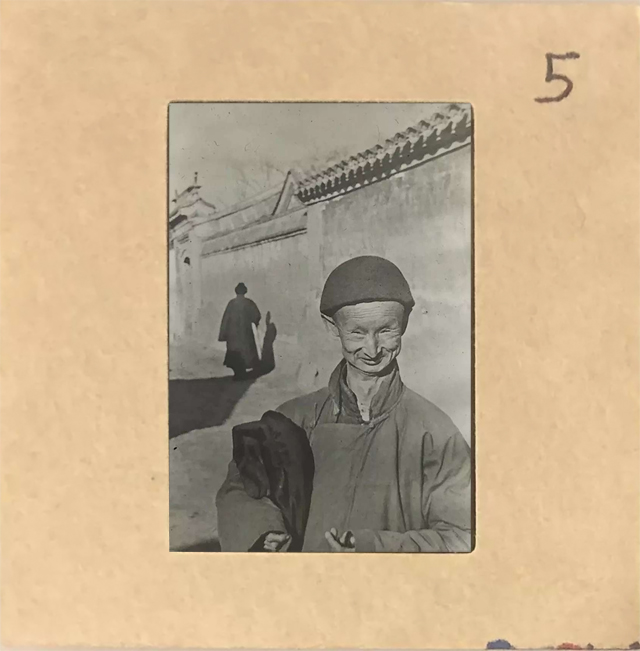
《清末宫廷太监,北平,1949》底片
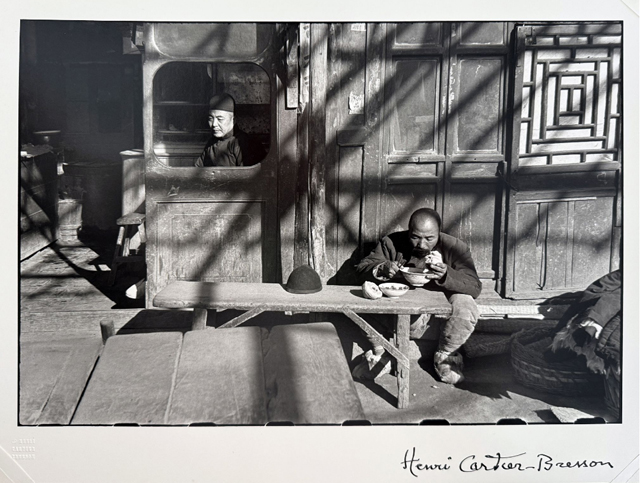
名称: 最后日子
类别: Photography/照片
日期: 1949
尺寸: 24cm×36cm
备注:In the Last Days of the Kuomintang, Peking,1949/国民党在北平的最后日子
Note/: 《国民党在北平的最后日子》(In the Last Days of the Kuomintang, Peking,1949)是亨利·卡蒂埃-布列松在中国拍摄的重要作品之一。这组照片记录了1949年中国政权更替的关键时刻,展现了国民党在北平(今北京)即将撤离和新政权即将建立前的社会氛围。布列松以其敏锐的观察力,捕捉到城市街头的路边小摊一位中年男人默默低头吃饭,他的神情中既有不安与迷茫,也有对未来的期待。作品不仅具有新闻摄影的即时性,还通过精准的构图与深沉的人文视角,将历史转折中的复杂情感呈现出来。作为“决定性瞬间”的典型范例,它不仅见证了中国历史的重要节点,也体现了布列松将纪实与艺术完美融合的摄影理念。
Henri Cartier-Bresson (1908-2004) is regarded as one of the most influential photographers of the 20th century, celebrated as the “father of modern photojournalism” and the originator of the concept of the “decisive moment.” Born in Chantilly, France, he was trained as a painter and influenced by Surrealism before turning to photography in the 1930s. With his Leica camera, he pioneered street photography, capturing fleeting yet meaningful instants with striking compositional precision. For Cartier-Bresson, the essence of photography lay in seizing the “decisive moment,” when form and meaning converge in a split second to create a timeless image.
亨利·卡蒂埃-布列松(Henri Cartier-Bresson,1908-2004)是20世纪最具影响力的摄影大师,被誉为“现代新闻摄影之父”和“决定性瞬间”的提出者与实践者。他出生于法国尚蒂伊,早年接受绘画训练,受到超现实主义艺术影响。1930年代,他开始以徕卡相机投身街头摄影,以敏锐的直觉与精准的构图,捕捉到生活中转瞬即逝却极具意味的画面。他认为摄影的本质在于把握“决定性瞬间”,使真实与形式在一瞬间达到完美的统一。
Throughout his life, Cartier-Bresson traveled extensively, documenting both everyday life and historic transformations. In 1949, he visited China and produced a remarkable series of photographs during the Chinese Civil War and the early years of the People’s Republic. Among them, one of his most renowned works is Eunuch of the Imperial Court of the Last Dynasty, Peking, 1949. The image portrays a former court eunuch of the Qing dynasty, standing as a living relic of China’s imperial past at a moment of sweeping social and political change. With its stark simplicity and profound human depth, the photograph reveals Cartier-Bresson’s unique ability to link personal destinies with the broader tides of history.
His works are held today in the world’s most prestigious museums and institutions. These include the Museum of Modern Art (MoMA), New York; San Francisco Museum of Modern Art (SFMOMA); National Gallery of Art, Washington, D.C.; Centre Pompidou, Paris; Musée national d’art moderne, France; the Fondation Henri Cartier-Bresson, Paris; and the Victoria and Albert Museum, London. These collections affirm his dual legacy as both a pioneering photojournalist and an artist of enduring cultural significance. His photographs, at once documentary and poetic, continue to shape the global understanding of photography as both historical witness and art form.
布列松一生行遍世界,记录重大历史事件与社会变迁。他在1949年前后多次到访中国,拍摄了国共内战时期及新中国成立初期的影像,其中最具代表性的一幅是《清末宫廷太监,北平,1949》(Eunuch of the Imperial Court of the Last Dynasty, Peking, 1949)。这张照片以极简的构图和深沉的人文视角,记录了传统帝制遗民与现代历史交替的瞬间,展现出他对时代与个体命运的敏锐洞察。
布列松的摄影作品现藏于全球最重要的艺术机构与博物馆中。包括纽约现代艺术博物馆(Museum of Modern Art, MoMA)、旧金山现代艺术博物馆(SFMOMA)、华盛顿国家美术馆(National Gallery of Art)、巴黎蓬皮杜艺术中心(Centre Pompidou)、法国国立现代艺术博物馆(Musée national d’art moderne)、巴黎亨利·卡蒂埃-布列松基金会(Fondation Henri Cartier-Bresson),以及伦敦维多利亚与阿尔伯特博物馆(Victoria and Albert Museum)。这些馆藏不仅彰显了布列松作为摄影艺术先驱的地位,也确保了他关于人文关怀与影像美学的遗产得以长久流传。>>返回>>
 PHOTO影像