名称: A Culprit Before a Magistrate/犯人面见衙官 类别: Hand-colored British copperplate engraving/英国铜版雕刻(手工上色) 版画家: John Dadley/约翰·达德利 日期: 1801 尺寸: 25x34cm 备注: 这幅铜版画由英国雕刻家约翰·达德利(John Dadley,约1767-1817)于1801年创作,是他运用点刻铜版(stipple engraving)技法完成的代表作品之一。画面描绘了清代中国的司法场景:一名犯人站在坐着的衙官面前,周围环绕随从、官员及审判用具,生动呈现了当时欧洲人对中国法律制度和社会秩序的观察与想象。 达德利通过点刻技法,用密集或稀疏的小点表现人物服饰的质地、褶皱及光影渐变,使画面细腻柔和、层次丰富。印刷后常辅以手工着色,增强视觉效果与真实感。这种技法不仅适合大规模复制,同时保持了图像的精细与艺术表现力。《犯人面见衙官》体现了达德利在跨文化题材中的雕刻水平,也成为18至19世纪欧洲公众了解中国风俗、服饰和法律制度的重要视觉资料。与达德利为威廉·米勒(William Miller)服饰志系列创作的其他中国题材版画一样,该作品兼具艺术价值与历史及民族志研究价值,是研究中西文化交流和早期版画艺术不可或缺的参考之作。

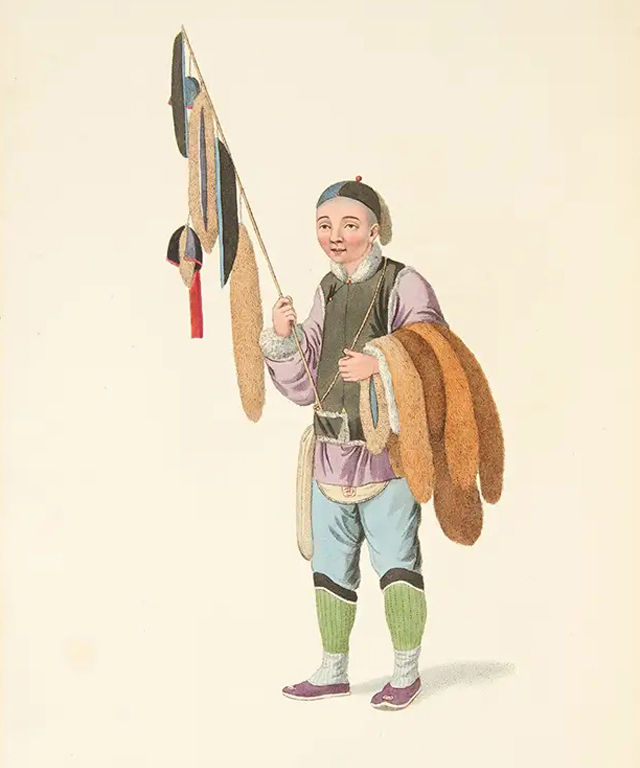
John Dadley (1767-1817) was a prominent British stipple engraver active in the late 18th and early 19th centuries, renowned for his finely detailed color plates. He was a key engraver for London publisher William Miller’s series of costume books, documenting clothing and cultural practices from various countries. His notable works include The Costume of China (1799–1800), The Costume of Turkey (1802), and The Costume of the Russian Empire (1803). Dadley skillfully used stipple engraving to depict fabrics, textures, and light effects, often combined with hand coloring, producing plates suitable for large-scale printing and enhancing European visual understanding of foreign cultures. Beyond costume books, he created illustrations for literary works and portraits, demonstrating versatility in adapting his technique to different subjects. Though not an original painter, Dadley translated artists’ drawings and overseas visual sources into widely disseminated, high-quality prints. His works are preserved in major institutions, including the British Museum and the National Portrait Gallery, London, highlighting their historical and artistic significance. Stipple engraving is a printmaking technique in which images are formed on a copper plate using small dots or fine incisions. Unlike line engraving, stippling uses dots of varying density to convey tone, texture, and light, producing soft, nuanced effects. Artists sketch the image, engrave it with a needle or burin, and print reproducible plates. Often combined with hand coloring, stipple engraving was widely used for portraits, illustrations, and costume books, balancing detail and tonal subtlety with suitability for mass publication, making it an important 18th–19th century European printmaking method. 约翰·达德利(John Dadley,约1767-1817)英国18—19世纪初著名的点刻铜版画家,是英国伦敦出版商威廉·米勒服饰志系列的重要版画师,代表作包括《The Costume of China》(1799–1800)、《The Costume of Turkey》(1802)及《The Costume of the Russian Empire》(1803)。约翰善用点刻法表现衣纹、材质与光影,配合手工着色,使图版既细腻又适合大规模印刷,推动了欧洲对海外服饰与文化的视觉认知。 除服饰志,他还为文学作品与肖像画制作插图,技法适应性广。其作品现藏于大英博物馆、英国国家肖像馆等机构。他精湛的点刻技艺与出版实践,使他成为19世纪初伦敦彩色版画及跨文化图像传播的重要人物。 点刻铜版画(Stipple Engraving)是一种以小点或细小刻痕在铜版上形成图像的雕刻技法,兴起于18世纪欧洲。与传统线刻不同,点刻通过密集或稀疏的点阵表现明暗、质感与渐变,能够呈现柔和的光影效果和细腻的肤理。艺术家通常先在铜版上绘制草图,再用针或刻刀以点或短线刻出图像,最后通过印刷得到可复制的版画。此法常与手工着色结合,尤其在肖像画、插图和服饰志中广泛应用。点刻铜版画既适合大规模出版,也能保持画面细节和层次感,是18—19世纪欧洲版画重要表现手段之一。>>返回>>

 PHOTO影像