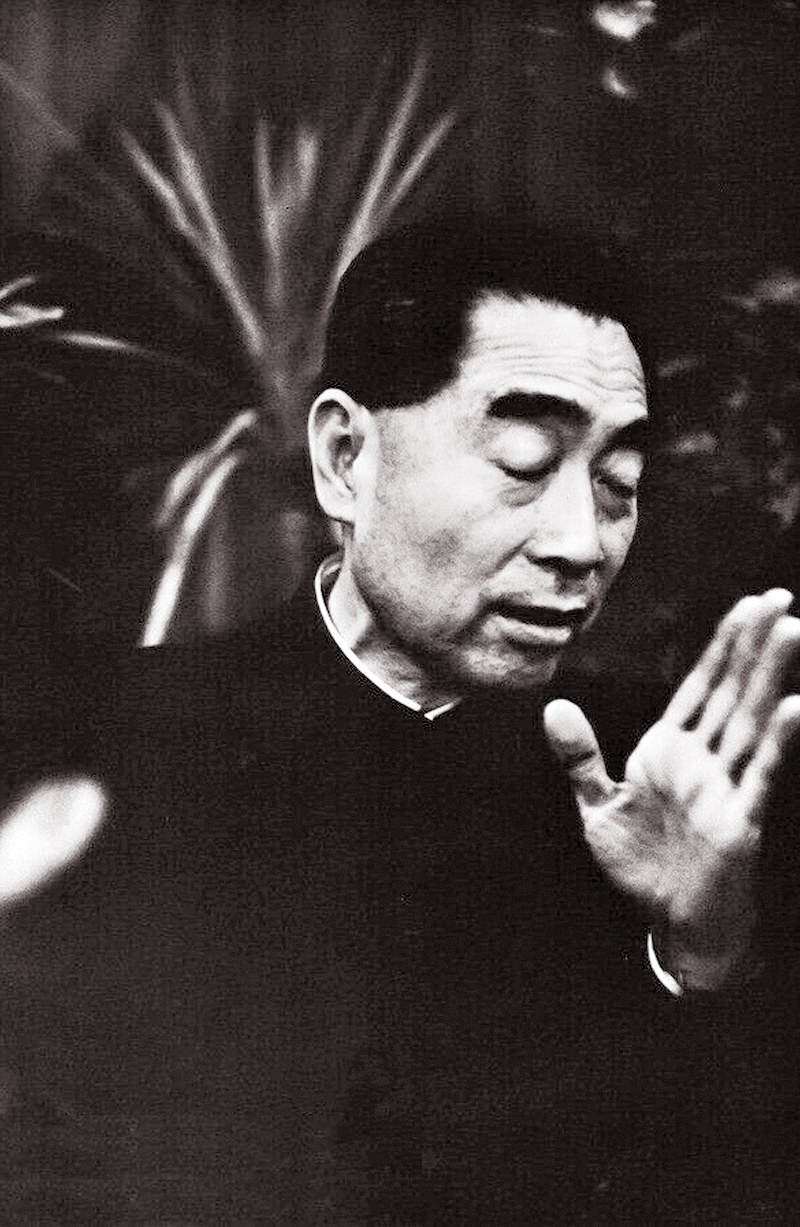
 名称: 周恩来
作者:让卢普·西耶夫
日期: 1957年
尺寸: 15 x 23厘米
描述: 让卢普·西耶夫/Jeanloup Sieff(1933年─2000年)出生于法国,马格南摄影师,作品题材以风光和人像作品著称。尤其是他的时尚人像作品,成为了20世纪的经典,因此被冠以大师的称号。他通过对光线的精准把握以及画面细节元素的安排来营造氛围,他的一些作品传递出的感觉让人不安、猜测、期待、想象,充满了悬疑的色彩。画面具有故事性,同时依然能够保持作品的时尚感。他经常使用广角镜,以超现实的画质注入影像,他的作品在世界各地的博物馆都有收藏。
名称: 周恩来
作者:让卢普·西耶夫
日期: 1957年
尺寸: 15 x 23厘米
描述: 让卢普·西耶夫/Jeanloup Sieff(1933年─2000年)出生于法国,马格南摄影师,作品题材以风光和人像作品著称。尤其是他的时尚人像作品,成为了20世纪的经典,因此被冠以大师的称号。他通过对光线的精准把握以及画面细节元素的安排来营造氛围,他的一些作品传递出的感觉让人不安、猜测、期待、想象,充满了悬疑的色彩。画面具有故事性,同时依然能够保持作品的时尚感。他经常使用广角镜,以超现实的画质注入影像,他的作品在世界各地的博物馆都有收藏。
 名称: 宋子文
作者:尤素福·卡殊
日期: 1930年-1940年代
尺寸: 20 x 26厘米
描述: 尤素福·卡殊/Yousuf Karsh(1908年-2002年 )出生亞美尼亞,在加拿大从事攝影工作,是世界上最广为人知的肖像攝影師,他拍摄邱吉尔肖像让他在国际上获得最高知名度。他拍攝的世界名人包括;英国首相邱吉尔、美国作家海明威、古巴领袖卡斯特罗。今天我们可以在加拿大國家美术馆、紐約的现代博物馆、美国大都會博物館、法國國家图书馆、伦敦國家肖像博物馆、澳洲的國家肖像博物馆看到的作品。
名称: 宋子文
作者:尤素福·卡殊
日期: 1930年-1940年代
尺寸: 20 x 26厘米
描述: 尤素福·卡殊/Yousuf Karsh(1908年-2002年 )出生亞美尼亞,在加拿大从事攝影工作,是世界上最广为人知的肖像攝影師,他拍摄邱吉尔肖像让他在国际上获得最高知名度。他拍攝的世界名人包括;英国首相邱吉尔、美国作家海明威、古巴领袖卡斯特罗。今天我们可以在加拿大國家美术馆、紐約的现代博物馆、美国大都會博物館、法國國家图书馆、伦敦國家肖像博物馆、澳洲的國家肖像博物馆看到的作品。
 名称: 宋美玲
作者:尤素福·卡殊
日期: 1930年-1940年代
尺寸: 20 x 28厘米
描述: 同上
名称: 宋美玲
作者:尤素福·卡殊
日期: 1930年-1940年代
尺寸: 20 x 28厘米
描述: 同上
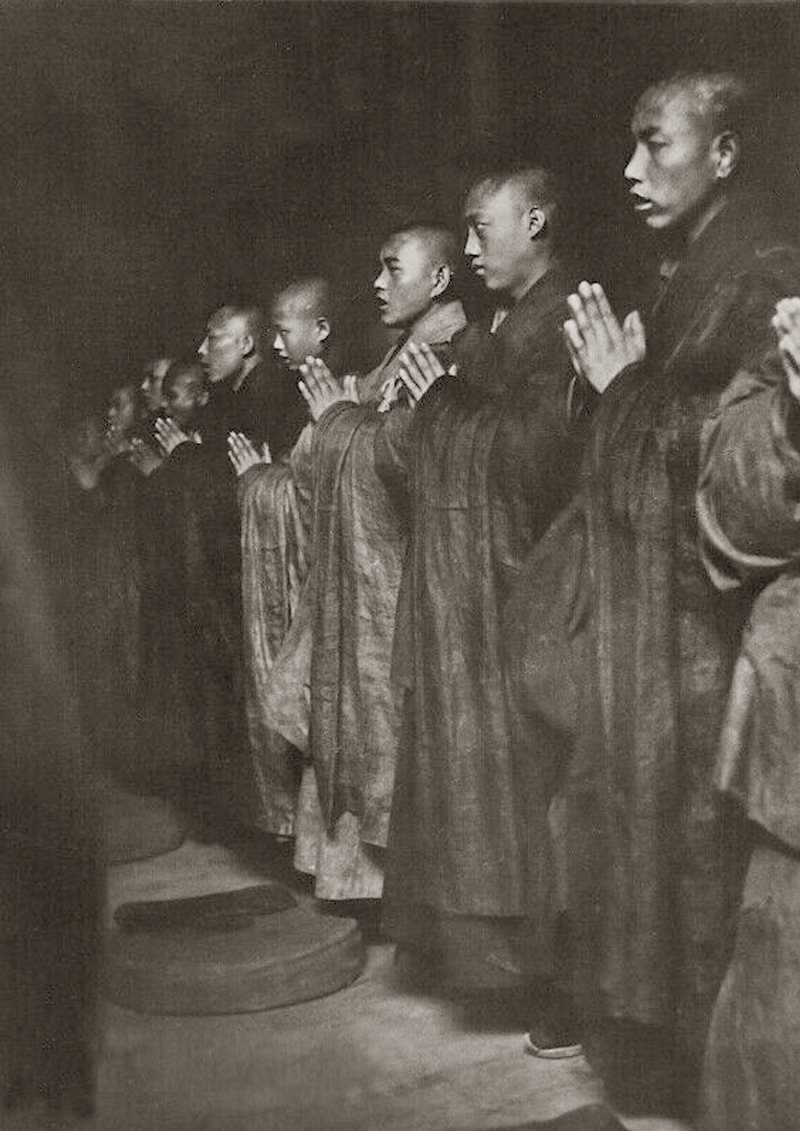 名称: 僧人念经
作者:亚瑟·德·卡瓦略
日期: 1920年-1930年代
尺寸: 15 x 23厘米
描述: 卡瓦略/Dr. Arthur Alfred De Carvalho(1890年-1969年)葡萄牙人,他生于香港,祖父与父亲都曾任职香港殖民地首席财务官。他本人在1914年毕业于美国加州大学伯克利分校口腔医学院,是香港注册牙科医师。1920年代他开始从事摄影创作生涯,后来他在中国上海行医。他1928年参与创建上海艺术俱乐部(The Shanghai Art Club),成为其主要成员之一,并多次参加俱乐部举行的艺术展览,并与当上海杭州等地的中外艺术家多有交往。1940年他举家赴美国加州定居,1969年逝世,享年79岁。
名称: 僧人念经
作者:亚瑟·德·卡瓦略
日期: 1920年-1930年代
尺寸: 15 x 23厘米
描述: 卡瓦略/Dr. Arthur Alfred De Carvalho(1890年-1969年)葡萄牙人,他生于香港,祖父与父亲都曾任职香港殖民地首席财务官。他本人在1914年毕业于美国加州大学伯克利分校口腔医学院,是香港注册牙科医师。1920年代他开始从事摄影创作生涯,后来他在中国上海行医。他1928年参与创建上海艺术俱乐部(The Shanghai Art Club),成为其主要成员之一,并多次参加俱乐部举行的艺术展览,并与当上海杭州等地的中外艺术家多有交往。1940年他举家赴美国加州定居,1969年逝世,享年79岁。
 名称: 北京戒台寺僧人
作者: 纳德·曼尼
日期: 1910-1920年代
尺寸: 19 x 23厘米
备注:唐纳德·曼尼/Donald Mennie(1875年-1944年) ,苏格兰裔摄影师。1899年来到上海,他擅长拍摄风景和周边市民日常生活。1942年他在当时上海街头拍摄日本军队的暴行被抓入上海龙华集中营, 由于集中营恶劣的条件使已年近70的他健康情况恶化不幸于1944年1月去世。
名称: 北京戒台寺僧人
作者: 纳德·曼尼
日期: 1910-1920年代
尺寸: 19 x 23厘米
备注:唐纳德·曼尼/Donald Mennie(1875年-1944年) ,苏格兰裔摄影师。1899年来到上海,他擅长拍摄风景和周边市民日常生活。1942年他在当时上海街头拍摄日本军队的暴行被抓入上海龙华集中营, 由于集中营恶劣的条件使已年近70的他健康情况恶化不幸于1944年1月去世。
 名称: 北京中南海瀛台院落
作者: 纳德·曼尼
日期: 1910-1920年代
尺寸: 19 x 25厘米
备注:同上
名称: 北京中南海瀛台院落
作者: 纳德·曼尼
日期: 1910-1920年代
尺寸: 19 x 25厘米
备注:同上
 名称: 北京永定门
作者: 喜仁龙
日期: 1920年代
尺寸: 16 x 21厘米
备注:喜龙仁/Osvald Siren(1879-1966年),瑞典艺术史学家,他是20世纪西方极为重要的中国建筑史学专家。他曾担任瑞典斯德哥尔摩大学艺术史教授、瑞典博物馆绘画与雕塑部主任馆员等职,查尔斯·朗·弗利尔奖章(Charles Lang Freer Medal)获得者。1916年起,相继赴美国耶鲁大学、哈佛大学和日本名校讲学。1920年起六次来华,并深深爱上了东方艺术。对中国古代建筑、雕塑、绘画艺术研究极深,代表作有《北京的城墙和城门》(1924)、《中国雕塑》(1925)、《中国北京皇城写真全图》(1926)、《中国早期艺术史》(1929)、《中国园林》(1949)等。
名称: 北京永定门
作者: 喜仁龙
日期: 1920年代
尺寸: 16 x 21厘米
备注:喜龙仁/Osvald Siren(1879-1966年),瑞典艺术史学家,他是20世纪西方极为重要的中国建筑史学专家。他曾担任瑞典斯德哥尔摩大学艺术史教授、瑞典博物馆绘画与雕塑部主任馆员等职,查尔斯·朗·弗利尔奖章(Charles Lang Freer Medal)获得者。1916年起,相继赴美国耶鲁大学、哈佛大学和日本名校讲学。1920年起六次来华,并深深爱上了东方艺术。对中国古代建筑、雕塑、绘画艺术研究极深,代表作有《北京的城墙和城门》(1924)、《中国雕塑》(1925)、《中国北京皇城写真全图》(1926)、《中国早期艺术史》(1929)、《中国园林》(1949)等。
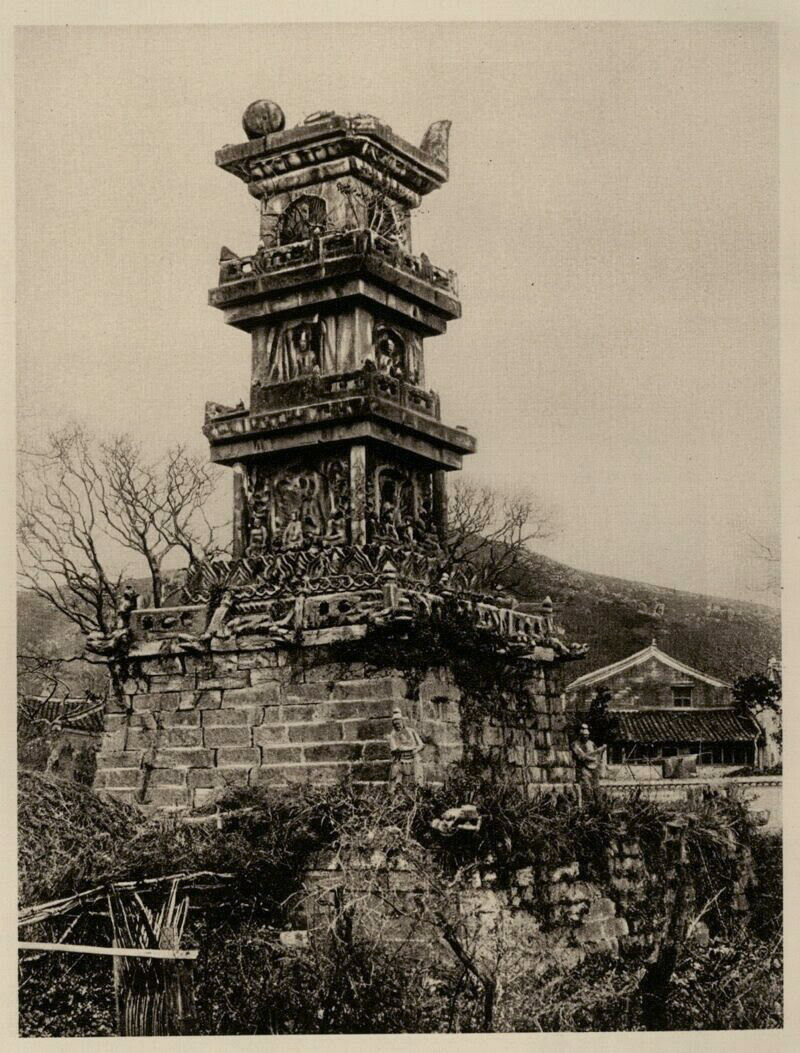 名称: 浙江舟山普陀山多宝塔
作者: 恩斯特·柏石曼
日期: 1900年代
尺寸: 15 x 21厘米
备注:恩斯特·柏石曼/Ernst Boerschmann (1873-1949年)德国建筑师。生于拉脱维亚,他是第一位全面考察中国古建筑的外国建筑师。
PHOTOGRAVURE (Hand Gravure)- Printers had seen potential in daguerreotypes and by the 1840's some were being etched and engraved upon to strengthen the image for printing, gut the plate's surface remained delicate and this method had limited use. Eventually the photoglyphic engraving process as used by Talbot evolved into photogravure (called heliogravure in Europe) by substituting the same fine resin powder as used in aquatint for the copal. Once the rosin has melted to a plate's surface to create a random dot pattern, a clear photosensitive dichromate gelatin emulsion is applied. When dry it is then exposed to a positive transparency where the gelatin light hardened areas form an additional acid resist. The remaining gelatin is wash away in proportion to the density of the transparency that covered it, either nearly or completely exposing the metal surface of the plate. The plate is then heated at a higher temperature making its surface very hard, and the remaining resist is sometimes dyed a dark hue to better observe the image against the exposed metal. When placed in successive acid baths of decreasing strength, the metal will first dissolve in the exposed areas between the rosin dots. The thinner areas of gelatin will eventually wear away in proportion to their exposure to light and reveal more bare metal of the plate underneath. Because these areas have less contact time with the acid they will not etch as deeply, and these shallow wells will hold less ink producing lighter tones when printed.
Photogravure produces thousands of irregular ink cells in varying depths that can merge into a subtle continuous toned image with very rich blacks. In addition the printing plate is also very durable, able to yield sixty thousand impressions. Though the results obtained by this process are of a higher quality than many other printing methods, its complexity makes it relatively more expensive and others sought ways of reducing cost. The Jaffe Brothers in Vienna expanded upon Talbot’s photographic veil in 1877 using millers gauze to break up the image while being photomechanically transferred. Other techniques such as the stagmatype (spitzertype) introduced in 1866 featured a gum grain with the photosensitive gelatin emulsion. All of the alternatives faired worse in the marketplace, so despite the cost of photogravure this process continued to be used even after the introduction of rotogravure and up into the 1930’s but only to produce higher end postcards. Only a handful of fine printers use this process today.
Duogravure -An image made by double printing on a gravure press, duogravure is used to deepen tones or add color.
名称: 浙江舟山普陀山多宝塔
作者: 恩斯特·柏石曼
日期: 1900年代
尺寸: 15 x 21厘米
备注:恩斯特·柏石曼/Ernst Boerschmann (1873-1949年)德国建筑师。生于拉脱维亚,他是第一位全面考察中国古建筑的外国建筑师。


PHOTOGRAVURE (Hand Gravure)- Printers had seen potential in daguerreotypes and by the 1840's some were being etched and engraved upon to strengthen the image for printing, gut the plate's surface remained delicate and this method had limited use. Eventually the photoglyphic engraving process as used by Talbot evolved into photogravure (called heliogravure in Europe) by substituting the same fine resin powder as used in aquatint for the copal. Once the rosin has melted to a plate's surface to create a random dot pattern, a clear photosensitive dichromate gelatin emulsion is applied. When dry it is then exposed to a positive transparency where the gelatin light hardened areas form an additional acid resist. The remaining gelatin is wash away in proportion to the density of the transparency that covered it, either nearly or completely exposing the metal surface of the plate. The plate is then heated at a higher temperature making its surface very hard, and the remaining resist is sometimes dyed a dark hue to better observe the image against the exposed metal. When placed in successive acid baths of decreasing strength, the metal will first dissolve in the exposed areas between the rosin dots. The thinner areas of gelatin will eventually wear away in proportion to their exposure to light and reveal more bare metal of the plate underneath. Because these areas have less contact time with the acid they will not etch as deeply, and these shallow wells will hold less ink producing lighter tones when printed.

Photogravure produces thousands of irregular ink cells in varying depths that can merge into a subtle continuous toned image with very rich blacks. In addition the printing plate is also very durable, able to yield sixty thousand impressions. Though the results obtained by this process are of a higher quality than many other printing methods, its complexity makes it relatively more expensive and others sought ways of reducing cost. The Jaffe Brothers in Vienna expanded upon Talbot’s photographic veil in 1877 using millers gauze to break up the image while being photomechanically transferred. Other techniques such as the stagmatype (spitzertype) introduced in 1866 featured a gum grain with the photosensitive gelatin emulsion. All of the alternatives faired worse in the marketplace, so despite the cost of photogravure this process continued to be used even after the introduction of rotogravure and up into the 1930’s but only to produce higher end postcards. Only a handful of fine printers use this process today.

Duogravure -An image made by double printing on a gravure press, duogravure is used to deepen tones or add color.

凹版是指照相凹版即采用分色的方法制版,用三原色油墨进行套印,即可印出色彩与原稿相符的作品。为了表现画面的深暗部分,有时再增加黑版、灰版或其它色版套印,称为“四色版”、“五色版”,有时还运用专色,以达到墨色淳厚和简洁明快的效果。

凹版的特征:版纹深、网纹细、吃墨量大,表现能力很强, 据说最多可用到十色板。通常运用三色版或四色版,就能印制出刷色效果比较好的作品;色彩鲜艳、浓郁、纯正,层次丰富,柔和而细腻。 双色凹版(duogravure)是指双面印刷机在印刷的过程中,通过添加深色调或其它颜色来完成。照相凹版,俗称影写版,是照相制版术应用于凹版制作的工艺技术。早期的照相凹版工艺是照相腐蚀凹版制版工艺,1894年德国人发明。1895年嘉氏赴英国设立凹印公司,开始以照相凹版印刷名画,盛行一时。1902年经过改良使照相凹版技术日臻完善。到1930年,美国拔脱立克图书公司又试制彩色照相凹版成功。此后欧美各国对此颇为重视,竭力提倡,推广。>>返回>>
 PHOTO影像